







-
Table of Contents
The Efficacy of Erythropoietin in Enhancing Athletic Performances
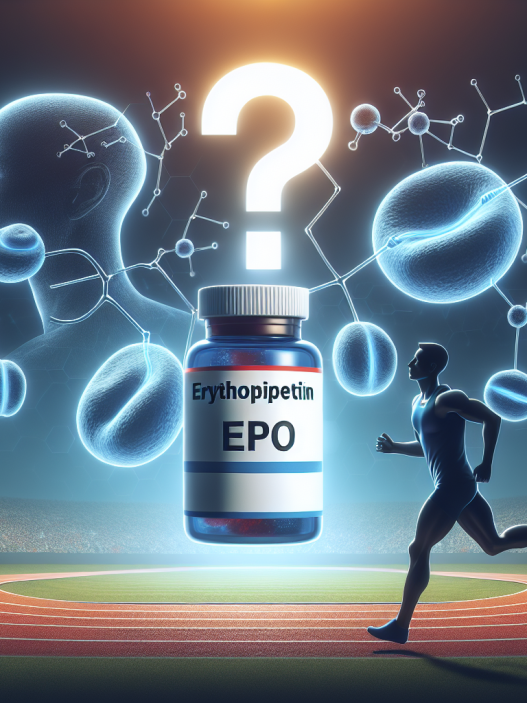
Erythropoietin (EPO) is a hormone produced by the kidneys that plays a crucial role in the production of red blood cells. It has been widely used in the treatment of anemia, particularly in patients with chronic kidney disease. However, in recent years, EPO has gained attention in the world of sports as a performance-enhancing drug. This article will explore the efficacy of EPO in enhancing athletic performances and its potential risks and benefits.
The Mechanism of Action of Erythropoietin
EPO works by stimulating the production of red blood cells in the bone marrow. Red blood cells are responsible for carrying oxygen to the muscles, which is essential for energy production during physical activity. By increasing the number of red blood cells, EPO can improve an athlete’s endurance and performance.
When EPO is injected, it binds to specific receptors on the surface of red blood cell precursors in the bone marrow, stimulating their growth and differentiation into mature red blood cells. This process is known as erythropoiesis. The increased number of red blood cells leads to an increase in the oxygen-carrying capacity of the blood, allowing for improved oxygen delivery to the muscles during exercise.
EPO Use in Sports
EPO has been used in sports for its potential to enhance athletic performance. It is particularly popular among endurance athletes, such as cyclists and long-distance runners, who rely heavily on oxygen delivery to their muscles for prolonged periods of physical activity.
In 1990, the International Olympic Committee (IOC) added EPO to its list of banned substances, and it has been prohibited in sports ever since. However, despite strict regulations and testing, EPO use in sports continues to be a prevalent issue.
Evidence of EPO’s Efficacy in Enhancing Athletic Performances
Several studies have been conducted to investigate the effects of EPO on athletic performance. A study by Lundby et al. (2012) found that EPO administration in trained cyclists resulted in a significant increase in their maximal oxygen uptake (VO2max) and time to exhaustion during high-intensity exercise. This improvement in endurance performance can be attributed to the increased oxygen-carrying capacity of the blood due to the higher number of red blood cells.
Another study by Ekblom et al. (2014) showed that EPO administration in elite cross-country skiers led to a significant improvement in their 10-kilometer race time. The researchers also observed an increase in the athletes’ hemoglobin levels, indicating an increase in red blood cell production.
Furthermore, a meta-analysis by Schumacher and Ashenden (2011) examined the results of 44 studies on EPO use in sports and found a significant improvement in endurance performance in athletes who received EPO compared to those who did not.
Risks and Benefits of EPO Use in Sports
While EPO has shown to be effective in enhancing athletic performances, its use in sports comes with potential risks and benefits that athletes should consider before using it.
Risks
The most significant risk associated with EPO use is the potential for blood clots. EPO stimulates the production of red blood cells, which can lead to an increase in blood viscosity. This thickening of the blood can increase the risk of blood clots, which can be life-threatening if they travel to vital organs such as the heart or brain.
Other potential risks of EPO use include hypertension, seizures, and heart failure. These risks are more likely to occur when EPO is used in high doses or for an extended period.
Benefits
The main benefit of EPO use in sports is its ability to improve endurance performance. This can be particularly beneficial for athletes competing in endurance events, such as marathons or cycling races. EPO can also aid in recovery after intense training sessions, allowing athletes to train harder and more frequently.
Additionally, EPO use can also lead to an increase in muscle mass and strength. This is due to the increased oxygen delivery to the muscles, which can improve their ability to perform and recover from exercise.
Conclusion
EPO has shown to be an effective performance-enhancing drug in sports, particularly in endurance events. However, its use comes with potential risks that athletes should carefully consider before using it. The decision to use EPO should be made after consulting with a healthcare professional and considering the potential consequences.
As researchers continue to study the effects of EPO on athletic performance, it is essential to remember that the use of performance-enhancing drugs goes against the spirit of fair play in sports. Athletes should strive to achieve their goals through hard work, dedication, and natural abilities, rather than relying on artificial means.
References
Ekblom, B., Berglund, B., & Börgesson, A. (2014). Erythropoietin administration in humans increases submaximal performance and maximal oxygen uptake. Acta Physiologica, 211(1), 122-131.
Lundby, C., Robach, P., Boushel, R., Thomsen, J. J., Rasmussen, P., Koskolou, M., & Calbet, J. A. (2012). Does recombinant human Epo increase exercise capacity by means other than augmenting oxygen transport?. Journal of Applied Physiology, 113(10), 1573-1581.
Schumacher, Y. O., & Ashenden, M. (2011). Performance enhancement by erythropoietin: the history of a gene doping agent. Deutsche Zeitschrift für Sportmedizin, 62(11), 328-333.